A logo featuring a stylized heart design with blue, red, and white elements and the text "Dr. Shirish Agarwal, Cardiologist" below it.

Heatstroke vs Heart Attack: How to Identify the Difference – Expert Advice from the Best Cardiologist in Indore
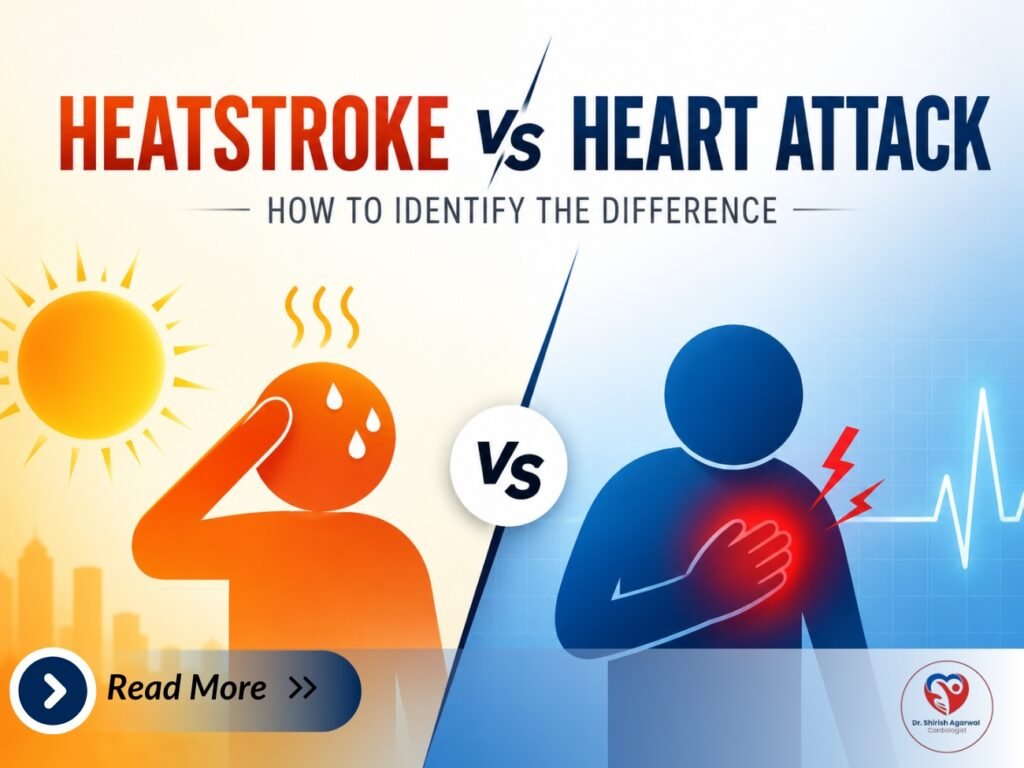
Heatstroke vs heart attack symptoms comparison explained by the Best Cardiologist in Indore

Why People Often Confuse Heatstroke and Heart Attack During summer, many people suddenly experience dizziness, sweating, weakness, chest discomfort, or difficulty breathing. In that moment, confusion begins. Some assume it is only because of heat and decide to rest at home. Others panic and fear they are having a heart attack. The difficult part is that both heatstroke and heart attack can share similar warning signs, especially during extremely hot weather. This confusion can sometimes become dangerous because the treatment for both conditions is completely different. Heatstroke happens when the body overheats and loses its ability to cool itself properly. A heart attack, on the other hand, occurs when blood flow to the heart muscle becomes blocked. One condition is mainly related to body temperature and dehydration, while the other is related to blood circulation and heart function. According to Dr. Shirish Agrawal, known as the Best Cardiologist in Indore, many patients ignore early symptoms because they assume they are only suffering from heat exhaustion. Unfortunately, delaying treatment during a heart attack can increase the risk of severe complications. Understanding the difference between these conditions helps people respond quickly, seek the right treatment, and avoid life-threatening situations. Heatstroke and Why It Happens Heatstroke is one of the most serious heat-related illnesses. It usually develops when the body is exposed to high temperatures for a long time and is unable to cool itself effectively through sweating. Normally, the human body maintains its temperature automatically. When the weather becomes hot, sweating helps cool the body down. However, during extreme heat, dehydration, or continuous sun exposure, this cooling system starts failing. As body temperature rises rapidly, important organs such as the brain, heart, kidneys, and muscles begin getting affected. Heatstroke often develops during: Long hours under direct sunlight Outdoor work in extreme heat Heavy exercise during summer afternoons Severe dehydration Poor ventilation and hot indoor environments Children, elderly individuals, and patients with existing heart problems are especially vulnerable during hot weather. The Best Cardiologist in Indore often advises heart patients to avoid unnecessary outdoor activity during peak summer hours because excessive heat puts additional strain on the cardiovascular system. One important thing about heatstroke is that symptoms can worsen very quickly. What begins as simple fatigue or dizziness may suddenly turn into confusion, fainting, or unconsciousness if immediate cooling and hydration are not provided. Heart Attack and Its Warning Signs A heart attack is very different from heatstroke, although some symptoms may overlap. A heart attack occurs when blood flow carrying oxygen to the heart muscle becomes blocked. This blockage is usually caused by cholesterol deposits and blood clots inside the arteries. When the heart muscle does not receive enough oxygen, part of it begins to get damaged. Without urgent treatment, the damage can become permanent. The Best Cardiologist in Indore explains that many heart attacks do not always happen dramatically like shown in movies. Sometimes symptoms begin slowly and quietly. Patients may feel mild chest pressure, unusual tiredness, sweating, or breathlessness before severe pain develops. Several factors increase the risk of heart attack: High blood pressure Diabetes Smoking and tobacco use High cholesterol levels Stress and lack of physical activity Obesity and unhealthy diet Family history of heart disease Summer heat can make these risks worse because dehydration thickens the blood and forces the heart to work harder. This is why doctors often notice an increase in cardiac emergencies during extremely hot months. Why Summer Increases the Risk of Both Conditions Many people underestimate how strongly summer heat affects the body. During hot weather, the heart works harder to maintain normal body temperature. Blood vessels expand, sweating increases, and fluid loss becomes more common. If the body loses too much water, blood circulation becomes less efficient. Blood pressure may fluctuate, and the heart needs to pump harder to maintain oxygen supply throughout the body. For healthy individuals, the body usually manages these changes. But for elderly people, heart patients, diabetics, smokers, and people with high blood pressure, this extra strain can become dangerous. The Best Cardiologist in Indore often explains that summer heat does not directly “cause” heart attacks in every case, but it can trigger serious problems in people who already have underlying heart disease. This is why proper hydration, avoiding peak sunlight hours, and regular medical monitoring become extremely important during summer. Symptoms of Heatstroke: What the Body Tries to Tell You Heatstroke affects the entire body because overheating disrupts normal organ function. Symptoms usually become more intense as body temperature rises. Important warning signs include: Very High Body TemperatureOne of the biggest signs of heatstroke is extremely high body temperature, often above 104°F. The skin may feel unusually hot because the body can no longer cool itself properly. Severe Weakness and ExhaustionPeople experiencing heatstroke often feel extreme tiredness and may struggle to stand, walk, or speak normally. The body loses energy rapidly due to dehydration and overheating. Confusion or Strange BehaviorSince high temperatures affect brain function, the person may become confused, disoriented, irritated, or unable to respond properly. In severe cases, unconsciousness may occur. Heavy Sweating or Sudden Dry SkinEarly heatstroke may cause excessive sweating, but as the condition worsens, sweating may stop completely and the skin may become dry and flushed. Nausea, Vomiting, and DizzinessHeat affects digestion and blood circulation, which can lead to nausea, dizziness, fainting, or vomiting. The Best Cardiologist in Indore advises seeking immediate medical help if these symptoms appear, especially in elderly individuals or heart patients. Symptoms of Heart Attack: Signs You Should Never Ignore Heart attack symptoms mainly occur because the heart muscle is not receiving enough oxygen-rich blood. While chest pain is common, not every patient experiences symptoms in the same way. Important signs include: Chest Pressure or TightnessMost patients describe a feeling of heaviness, squeezing, or pressure in the chest rather than sharp pain. The discomfort may come and go or remain constant. Pain Spreading to Other AreasPain may travel to the left arm, shoulder, neck, jaw, or back. This

Tobacco, Smoking & Heart Disease what Cardiologist in Indore Say –

Cigarettes forming a heart shape showing how tobacco and smoking increase the risk of heart disease

Why Smoking Is a Serious Threat to Your Heart Smoking affects many organs in the body, especially the heart. According to the Best Cardiologist in Indore, Dr. Shirish Agrawal, tobacco use is one of the leading causes of preventable heart disease worldwide. Many people associate smoking mainly with lung diseases such as chronic cough or breathing problems. However, the truth is that smoking affects many organs in the body, especially the heart and blood vessels. Medical research has repeatedly shown that Tobacco and Smoking Increase the Risk of Heart Disease in both young and older adults. The heart works continuously to pump blood and deliver oxygen throughout the body. When tobacco smoke enters the bloodstream, it introduces harmful chemicals that damage arteries, reduce oxygen levels, and force the heart to work harder. Over time, this constant strain increases the chances of developing heart problems such as high blood pressure, blocked arteries, and heart attacks. Doctors often explain that heart damage caused by smoking develops slowly. Many smokers feel healthy for years and assume the habit is not harming them. Unfortunately, by the time symptoms appear, the heart may already be under serious stress. According to Dr. Shirish Agrawal, widely regarded as the Best Cardiologist in Indore, many patients diagnosed with heart disease have a history of smoking. Understanding how Tobacco and Smoking Increase the Risk of Heart Disease can help individuals take preventive steps before serious complications develop. What Happens Inside the Body When You Smoke Every cigarette contains thousands of chemicals, many of which directly harm the heart and blood vessels. These chemicals quickly enter the bloodstream after inhalation and begin affecting how the heart functions. Doctors explain that Tobacco and Smoking Increase the Risk of Heart Disease because smoking disrupts several vital processes in the body simultaneously. Important harmful effects include: Nicotine Raises Heart Rate and Blood PressureNicotine stimulates the nervous system and causes the heart to beat faster. It also narrows blood vessels, which leads to increased blood pressure. When smoking becomes a daily habit, this repeated increase in heart rate and blood pressure forces the heart to work harder throughout the day. Over time, this extra workload weakens the heart muscle. Carbon Monoxide Reduces Oxygen Supply in the BloodTobacco smoke contains carbon monoxide, a gas that reduces the ability of blood to carry oxygen. When oxygen levels drop, the heart must pump harder to deliver enough oxygen to the body’s tissues. This continuous strain places unnecessary stress on the heart and increases the risk of cardiovascular disease. Toxic Chemicals Damage Blood Vessel WallsCigarette smoke introduces toxins that irritate and damage the inner lining of arteries. Once these delicate blood vessel walls are damaged, cholesterol and fatty deposits can build up more easily. This leads to narrowing of arteries and restricts blood flow to the heart. Because of these combined effects, medical experts consistently warn that Tobacco and Smoking Increase the Risk of Heart Disease even in individuals who smoke only a few cigarettes per day. How Smoking Damages Blood Vessels Healthy blood vessels are flexible and allow blood to flow freely throughout the body. Smoking interferes with this natural flexibility by damaging the inner lining of the arteries. When these arteries become irritated and inflamed, fatty deposits and cholesterol begin accumulating on the vessel walls. Over time, these deposits harden and form plaques that narrow the arteries. This condition is known as atherosclerosis. As the arteries become narrower, the heart must pump harder to push blood through the restricted passages. Eventually, blood flow to the heart muscle may become limited. Doctors emphasize that Tobacco and Smoking Increase the Risk of Heart Disease by accelerating this plaque buildup process. This is one of the main reasons smokers have a significantly higher risk of heart attacks compared to non-smokers. A consultation with the Best Cardiologist in Indore can help detect early signs of artery damage before severe complications occur. Smoking and High Blood Pressure High blood pressure is one of the most common risk factors for heart disease, and smoking plays a major role in increasing it. Each time a person smokes, nicotine causes blood vessels to constrict temporarily. This raises blood pressure for several minutes. When smoking occurs repeatedly throughout the day, blood pressure remains elevated for extended periods. Over time, persistent high blood pressure forces the heart to pump harder in order to circulate blood. This extra strain weakens the heart muscle and increases the risk of heart failure. Doctors frequently remind patients that quitting smoking is one of the most effective ways to lower blood pressure naturally. The Best Cardiologist in Indore often advises patients that controlling blood pressure becomes much easier after quitting tobacco. How Smoking Triggers Heart Attacks Heart attacks occur when blood flow to a portion of the heart muscle becomes blocked. Smoking increases the likelihood of this happening through several mechanisms. Smoking damages arteries and accelerates plaque buildup. At the same time, it increases the tendency of blood to form clots. When a blood clot forms inside a narrowed artery, it can suddenly block blood flow. This blockage deprives the heart muscle of oxygen, causing a heart attack. Research clearly shows that Tobacco and Smoking Increase the Risk of Heart Disease and sudden cardiac events, especially in individuals who smoke regularly. Dr. Shirish Agrawal, the Best Cardiologist in Indore, emphasizes that quitting smoking dramatically lowers the risk of heart attacks over time. Secondhand Smoke Is Also Dangerous Many people assume that only smokers are affected by tobacco. However, exposure to secondhand smoke can also harm heart health. When a person inhales smoke from nearby cigarettes, harmful chemicals enter their bloodstream. These toxins damage blood vessels in the same way as active smoking. Studies have found that individuals living with smokers have a higher risk of heart disease. This means Tobacco and Smoking Increase the Risk of Heart Disease not only for smokers but also for those exposed to smoke regularly. Creating smoke-free homes and workplaces can significantly reduce these risks.

How Quick CPR Can Save a Life Before Medical Help Arrives | Cardiac Specialist in Indore

A woman performing CPR on an unconscious man – Dr. Shirish Agrawal, Cardiac Specialist in Indore explaining how quick CPR can save a life before medical help arrives.

Sometimes, life gives no warning. A person may suddenly fall down and stop breathing. In that moment, every second matters. I am Dr. Shirish Agrawal, a Cardiac Specialist in Indore, and I have seen how quick action can save a life before a doctor or ambulance comes. Many patients who reach us for the Best Heart Treatment in Indore are alive today only because someone near them started CPR at the right time.

Sweet Tooth, Bitter Consequences: The Sugar-Heart Connection

Two wooden spoons filled with sugar and red heart shapes symbolizing the sugar-heart connection

In this blog, we’ll explore the effects of sugar on the heart shared by the Best Cardiologist in Indore. We’ll also dive into tips to reduce sugar for heart health, and how you can truly master how to cut sugar without cravings, as advised by Dr. Shirish Agrawal.

Heart Attack in Young Adults: Warning Signs and Prevention

A young man wearing a navy blue t-shirt and shorts is holding his chest and bending over outdoors, indicating chest pain or discomfort.

Heart attacks can happen at any age, including in young adults. With increasing stress, poor lifestyle habits, and unhealthy diets, even people in their 20s and 30s are at risk. Understanding the warning signs and preventive measures is crucial. Dr. Shirish Agrawal, the Best Cardiologist in Indore, explains how early detection and lifestyle management can make a significant difference.

Calcified Blockage Treatment in Indore, Expert Care by Dr. Shirish Agrawal

Doctor explaining calcified blockage treatment in Indore with heart model at clinic

If you’re searching for calcified blockage treatment in Indore, Dr. Shirish Agrawal offers advanced procedures and personalized care to help patients live healthier, longer lives. With years of expertise as one of the best cardiologists in Indore, he ensures precise diagnosis and effective treatment for even the toughest cases.