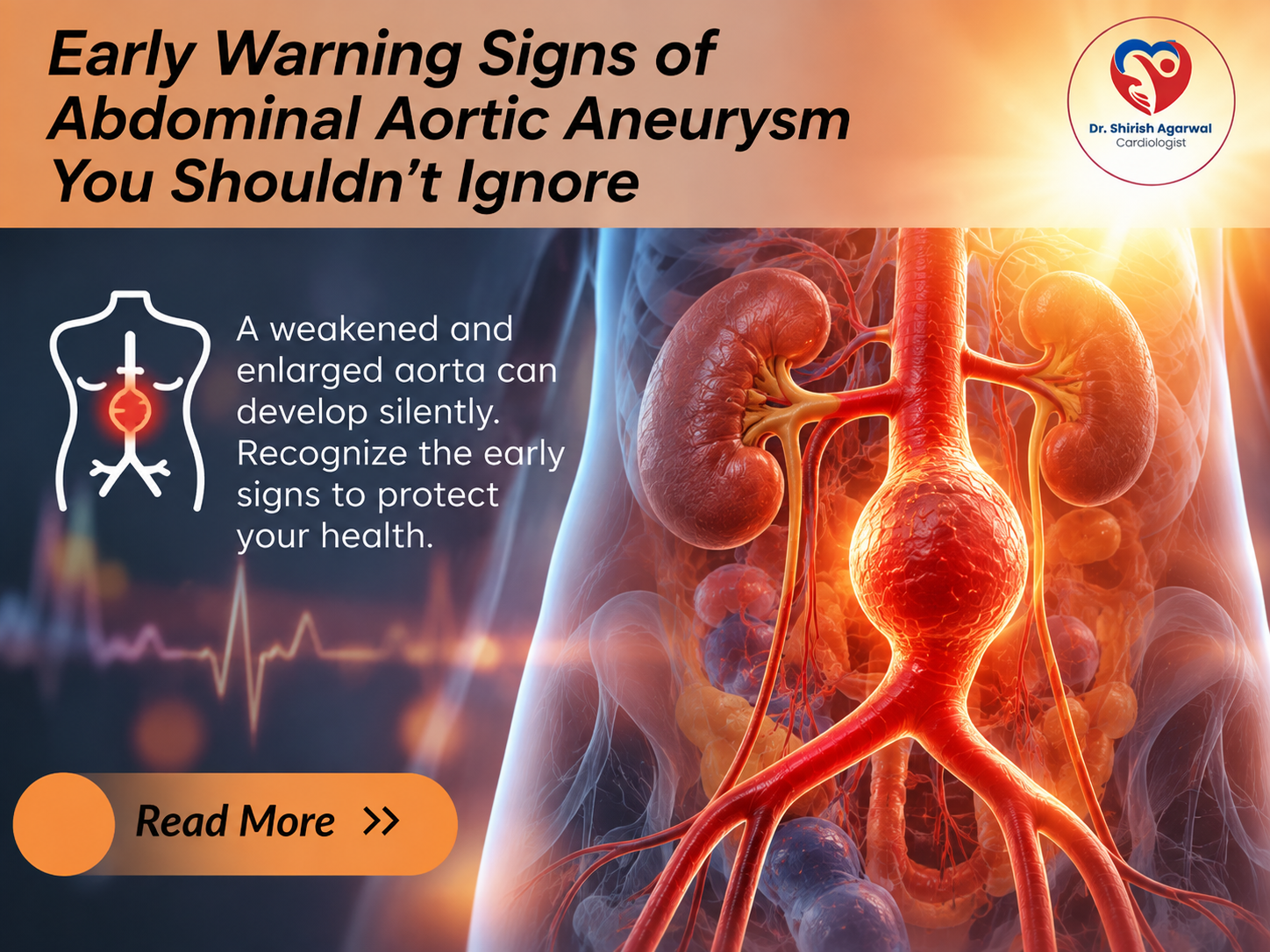
Abdominal Aortic Aneurysm Treatment in Indore is essential because an abdominal aortic aneurysm (AAA) often develops silently without noticeable symptoms until it becomes a life-threatening medical emergency. An abdominal aortic aneurysm occurs when the lower part of the body’s main artery, known as the aorta, becomes enlarged or weakened. If left untreated, it may rupture and cause severe internal bleeding. Recognizing the early warning signs and seeking immediate medical attention can significantly improve treatment outcomes. Dr. Shirish Agrawal, one of the Best Cardiologists in Indore, provides comprehensive diagnosis, advanced cardiovascular evaluation, and personalized treatment for abdominal aortic aneurysm and other heart and vascular diseases. With more than 7 years of experience in cardiology, he combines modern diagnostic technology with evidence-based treatment and compassionate patient care to help individuals protect their heart and vascular health.
Best Cardiologist in Indore – Dr. Shirish Agrawal
Best Cardiologist in Indore is Dr. Shirish Agrawal, an experienced cardiologist dedicated to providing comprehensive heart and vascular care with a strong focus on early diagnosis, preventive cardiology, and personalized treatment. Over the years, he has helped numerous patients manage complex cardiovascular conditions through accurate diagnosis and advanced medical care.
Dr. Shirish Agrawal completed his MBBS from Katuri Medical College and Hospital, Guntur, followed by an MD in General Medicine from KIMS, Karad, and later earned his DNB in Cardiology from KIMS, Trivandrum. His strong academic background and extensive clinical experience allow him to provide evidence-based treatment using modern diagnostic techniques.
Patients choose Dr. Shirish Agrawal because of his holistic approach to cardiac care, patient-centred treatment plans, and commitment to improving long-term heart health through education, prevention, and timely intervention.
What is an Abdominal Aortic Aneurysm?
Abdominal Aortic Aneurysm Treatment in Indore begins with understanding this potentially serious vascular condition. An abdominal aortic aneurysm (AAA) develops when a section of the abdominal aorta becomes weakened and gradually enlarges.
The aorta is the largest artery in the human body and carries oxygen-rich blood from the heart to the rest of the body. When part of this artery weakens, the vessel wall may bulge outward, increasing the risk of rupture if not diagnosed and treated in time.
Many abdominal aortic aneurysms develop slowly over several years and may not cause symptoms until they become dangerously large.
Early diagnosis is essential because timely treatment can prevent life-threatening complications.
Why Early Diagnosis is Important
Abdominal Aortic Aneurysm Treatment in Indore is most successful when the condition is detected before complications occur. Unfortunately, many people are unaware they have an aneurysm because the disease often progresses silently.
If an aneurysm ruptures, it becomes a medical emergency requiring immediate treatment.
Early diagnosis helps:
- Prevent aneurysm rupture
- Reduce the risk of internal bleeding
- Improve treatment outcomes
- Allow planned treatment instead of emergency surgery
- Protect overall cardiovascular health
Routine cardiovascular evaluation is particularly important for individuals with multiple risk factors.
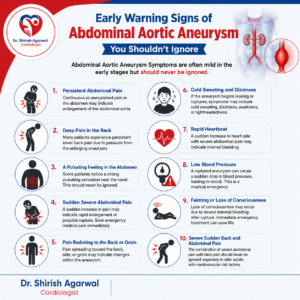
Early Warning Signs of Abdominal Aortic Aneurysm You Shouldn’t Ignore
Abdominal Aortic Aneurysm Symptoms are often mild in the early stages but should never be ignored.
Some of the most important warning signs include:
1. Persistent Abdominal Pain
Continuous or unexplained pain in the abdomen may indicate enlargement of the abdominal aorta.
The pain may be dull or constant and should always be evaluated by a cardiologist.
2. Deep Pain in the Back
Many patients experience persistent lower back pain because the enlarging aneurysm places pressure on nearby tissues.
Back pain that does not improve with routine treatment should be medically evaluated.
3. A Pulsating Feeling in the Abdomen
Some patients notice a strong pulsating sensation near the navel.
Although not always painful, this symptom should never be ignored.
4. Sudden Severe Abdominal Pain
A sudden increase in abdominal pain may indicate rapid enlargement or possible rupture of the aneurysm.
Immediate emergency medical attention is required.
5. Pain Radiating to the Back or Groin
Pain spreading from the abdomen toward the back, side, or groin may indicate changes within the aneurysm.
6. Cold Sweating and Dizziness
If the aneurysm begins leaking or ruptures, patients may experience:
- Cold sweating
- Dizziness
- Weakness
- Lightheadedness
These symptoms require urgent hospitalization.
7. Rapid Heartbeat
A sudden increase in heart rate accompanied by severe abdominal pain may indicate internal bleeding.
Prompt diagnosis is critical.
8. Low Blood Pressure
A ruptured abdominal aortic aneurysm can cause a sudden drop in blood pressure, leading to shock.
This is a medical emergency.
9. Fainting or Loss of Consciousness
Loss of consciousness may occur due to severe internal bleeding following aneurysm rupture.
Immediate emergency treatment can be life-saving.
10. Severe Sudden Back and Abdominal Pain
The combination of severe abdominal pain with back pain should never be ignored, particularly in older adults with cardiovascular risk factors.
Who Is at Higher Risk of Abdominal Aortic Aneurysm?
Abdominal Aortic Aneurysm Risk Factors increase the likelihood of developing this condition.
Higher-risk individuals include:
- Adults over 60 years of age
- Men
- Smokers
- Patients with high blood pressure
- High cholesterol
- Family history of aneurysm
- Peripheral artery disease
- Coronary artery disease
People with these risk factors should undergo regular cardiovascular evaluations.
What Causes an Abdominal Aortic Aneurysm?
Abdominal Aortic Aneurysm Causes vary from person to person.
Common causes include:
- Atherosclerosis (hardening of arteries)
- Long-standing hypertension
- Smoking
- Age-related weakening of arteries
- Genetic predisposition
- Connective tissue disorders
- Chronic inflammation
Identifying and controlling these risk factors helps reduce disease progression.
How is an Abdominal Aortic Aneurysm Diagnosed?
Abdominal Aortic Aneurysm Diagnosis in Indore involves a detailed cardiovascular examination followed by advanced imaging investigations.
Depending on the patient’s condition, Dr. Shirish Agrawal may recommend:
- Physical examination
- Ultrasound Abdomen
- CT Scan
- CT Angiography
- MRI Angiography
- Echocardiography
- Blood pressure assessment
Accurate diagnosis helps determine the size, location, and severity of the aneurysm, allowing the doctor to recommend the most appropriate treatment.

Treatment Options for Abdominal Aortic Aneurysm
Abdominal Aortic Aneurysm Treatment in Indore depends on the size of the aneurysm, its rate of growth, the patient’s overall health, and the risk of rupture. After a detailed cardiovascular evaluation, Dr. Shirish Agrawal recommends the most appropriate treatment plan to ensure the best possible outcome.
Treatment may include:
Regular Monitoring
Small aneurysms that are not causing symptoms may only require regular follow-up with periodic imaging studies to monitor their size.
Lifestyle Modifications
Patients are advised to adopt heart-healthy habits such as:
- Quitting smoking
- Controlling blood pressure
- Managing cholesterol levels
- Maintaining a healthy weight
- Following a balanced diet
- Exercising regularly as advised by the doctor
Medications
Medicines may be prescribed to:
- Control high blood pressure
- Reduce cholesterol levels
- Lower the risk of cardiovascular complications
Surgical Treatment
Large or rapidly growing aneurysms may require surgical intervention to prevent rupture. Depending on the patient’s condition, appropriate surgical management is recommended after careful evaluation.
Early diagnosis allows planned treatment before the aneurysm becomes a life-threatening emergency.
Can an Abdominal Aortic Aneurysm Be Prevented?
Abdominal Aortic Aneurysm Prevention focuses on reducing the risk factors that weaken blood vessels and increase the likelihood of aneurysm formation.
Simple preventive measures include:
- Maintain healthy blood pressure
- Stop smoking
- Control diabetes
- Manage cholesterol levels
- Exercise regularly
- Eat a heart-healthy diet
- Maintain a healthy body weight
- Attend regular heart check-ups
- Follow prescribed medications
Preventive care plays a vital role in maintaining long-term cardiovascular health.
When Should You Consult a Cardiologist?
Abdominal Aortic Aneurysm Treatment in Indore should never be delayed if you experience symptoms or have multiple cardiovascular risk factors.
You should consult Dr. Shirish Agrawal if you have:
- Persistent abdominal pain
- Unexplained lower back pain
- A pulsating sensation in the abdomen
- High blood pressure
- Family history of aneurysm
- Smoking history
- High cholesterol
- Peripheral artery disease
- Coronary artery disease
Early evaluation can detect aneurysms before serious complications develop.
Why Dr. Shirish Agrawal is the Best Cardiologist in Indore for Abdominal Aortic Aneurysm Treatment
Dr. Shirish Agrawal is recognized as one of the Best Cardiologists in Indore, providing comprehensive diagnosis and management of abdominal aortic aneurysm and various cardiovascular diseases. With more than 7 years of experience in cardiology, he is dedicated to delivering evidence-based treatment through accurate diagnosis, modern technology, and compassionate patient care.
His approach focuses not only on treating heart and vascular diseases but also on educating patients about preventive heart care, healthy lifestyle modifications, and long-term cardiovascular wellness.
Patients choose Dr. Shirish Agrawal because of:
- 7+ Years of Experience in Cardiology
- Personalized Treatment Plans
- Holistic and Patient-Centred Cardiac Care
- Expertise in Advanced Cardiovascular Evaluation
- State-of-the-Art Diagnostic Technology
- Evidence-Based Treatment Approach
- Focus on Preventive Heart Care
- Compassionate Patient Care
- Accurate Diagnosis and Long-Term Disease Management
- Comprehensive Heart and Vascular Care
Choosing an experienced cardiologist like Dr. Shirish Agrawal helps patients receive timely diagnosis, appropriate treatment, and continuous support for maintaining lifelong cardiovascular health.
Summary
Abdominal Aortic Aneurysm Treatment in Indore is essential because abdominal aortic aneurysms often develop silently and may become life-threatening if left untreated. Recognizing warning signs such as persistent abdominal pain, back pain, dizziness, or a pulsating abdominal mass allows early medical intervention and significantly improves treatment outcomes.
With more than 7 years of experience, Dr. Shirish Agrawal provides comprehensive cardiovascular evaluation, advanced diagnostic services, and personalized treatment plans for abdominal aortic aneurysm and other heart diseases. His patient-centred approach and commitment to preventive cardiology help patients protect their heart and vascular health through timely diagnosis and evidence-based care.
FAQs – Abdominal Aortic Aneurysm Treatment in Indore
What is an Abdominal Aortic Aneurysm?
An abdominal aortic aneurysm is an enlargement of the abdominal portion of the aorta caused by weakening of the artery wall. Early diagnosis is important to prevent serious complications.
Who is the Best Cardiologist in Indore for Abdominal Aortic Aneurysm Treatment?
Dr. Shirish Agrawal is an experienced cardiologist providing comprehensive evaluation and management for abdominal aortic aneurysm and other cardiovascular diseases.
What are the early warning signs of an abdominal aortic aneurysm?
Common warning signs include persistent abdominal pain, lower back pain, a pulsating feeling in the abdomen, dizziness, sudden severe pain, and fainting.
Can an abdominal aortic aneurysm be treated without surgery?
Small aneurysms may only require regular monitoring and medical management. Larger aneurysms may require surgical treatment depending on the patient’s condition.
Who is at higher risk of developing an abdominal aortic aneurysm?
Older adults, smokers, individuals with high blood pressure, high cholesterol, and those with a family history of aneurysm have a higher risk.
How is an abdominal aortic aneurysm diagnosed?
Diagnosis may involve ultrasound, CT scan, CT angiography, MRI angiography, physical examination, and other cardiovascular investigations.
Can abdominal aortic aneurysms be prevented?
Maintaining healthy blood pressure, quitting smoking, controlling cholesterol, exercising regularly, and attending routine heart check-ups can help reduce the risk.
Why choose Dr. Shirish Agrawal for cardiovascular care?
Patients trust Dr. Shirish Agrawal because of his extensive cardiology experience, personalized treatment plans, preventive heart care approach, advanced diagnostic expertise, and compassionate patient-centred care.
Conclusion – Early Warning Signs of Abdominal Aortic Aneurysm You Shouldn’t Ignore
Abdominal Aortic Aneurysm Treatment in Indore should never be delayed because early diagnosis can prevent life-threatening complications and improve long-term outcomes. Symptoms such as persistent abdominal pain, unexplained back pain, dizziness, or a pulsating abdominal swelling should always be evaluated by an experienced cardiologist.
With more than 7 years of experience, Dr. Shirish Agrawal, one of the Best Cardiologists in Indore, provides comprehensive diagnosis, advanced cardiovascular evaluation, and personalized treatment for abdominal aortic aneurysm and other heart and vascular conditions. Through evidence-based care, preventive cardiology, and compassionate patient support, he is committed to helping patients maintain better heart health and reduce the risk of serious cardiovascular complications.