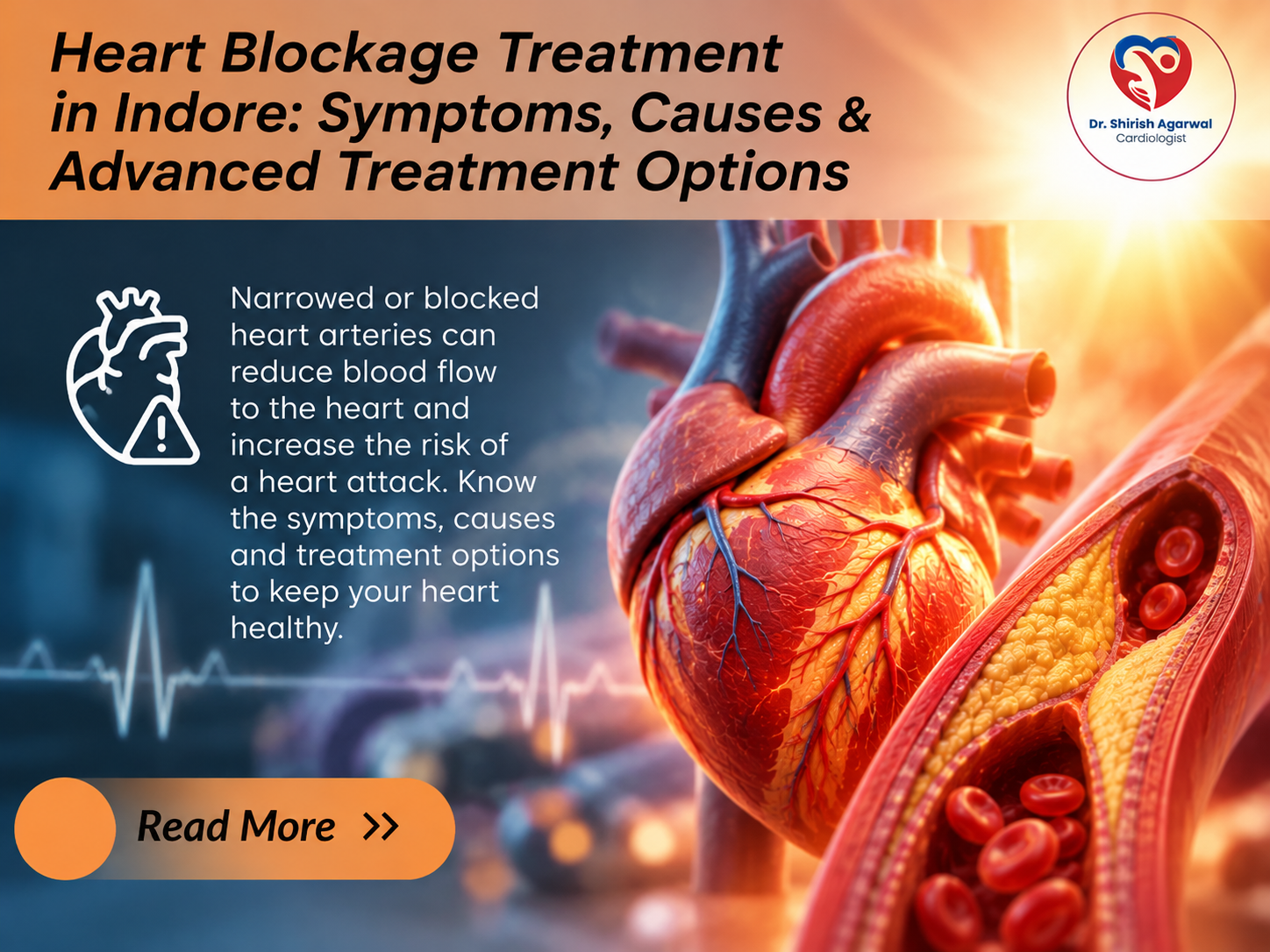
Heart blockage is one of the most common and serious cardiovascular conditions affecting people today. It develops when the arteries supplying blood and oxygen to the heart become narrowed or blocked due to the accumulation of fatty deposits known as plaque. If left untreated, a heart blockage can significantly increase the risk of chest pain, heart attacks, heart failure, and even sudden cardiac death.
Many people are surprised to learn that heart blockages can develop silently over many years without causing noticeable symptoms. In some cases, the first sign of a blockage may be a heart attack. This is why early diagnosis and timely treatment are extremely important.
If you are looking for heart blockage treatment in Indore, Dr Shirish Agrawal is a highly experienced Interventional Cardiologist who provides comprehensive diagnosis, prevention, and advanced treatment for coronary artery disease and blocked heart arteries.
With extensive expertise in angiography, angioplasty, stent placement, and heart disease management, Dr Shirish Agrawal helps patients receive timely and effective cardiac care.
Best Cardiologist in Indore – Dr Shirish Agrawal
Choosing an experienced cardiologist is essential when dealing with heart disease.
Dr Shirish Agrawal is widely recognized as one of the trusted cardiologists in Indore, providing advanced care for patients suffering from heart blockages, coronary artery disease, hypertension, chest pain, heart attacks, and various cardiac conditions.
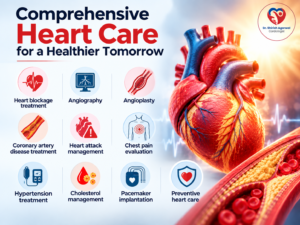
Patients consult Dr Shirish Agrawal for:
- Heart blockage treatment
- Angiography
- Angioplasty
- Coronary artery disease treatment
- Heart attack management
- Chest pain evaluation
- Hypertension treatment
- Cholesterol management
- Pacemaker implantation
- Preventive heart care
His patient-centered approach focuses on accurate diagnosis, personalized treatment, and long-term heart health.
About Dr Shirish Agrawal
Dr Shirish Agrawal is an experienced Interventional Cardiologist with over 7 years of specialized cardiology experience.
Qualifications
- MBBS – Katuri Medical College and Hospital, Guntur
- MD (General Medicine) – KIMS, Karad
- DNB (Cardiology) – KIMS, Trivandrum
Expertise
Dr Shirish Agrawal specializes in:
- Coronary angiography
- Coronary angioplasty
- Heart attack treatment
- Rotablation
- Intravascular Lithotripsy (IVL)
- Pacemaker implantation
- Heart failure management
- Hypertension treatment
- Cholesterol disorders
- Complex coronary interventions
He currently serves patients at:
Apollo Hospitals, Indore
Plot No. 2, Sector B, Scheme No. 74C, Vijay Nagar, Indore, Madhya Pradesh 452010
Prism Hospital & Research Centre, Dewas
33, Kalani Bagh, Tarani Colony, Ram Nagar, Dewas, Madhya Pradesh 455001
What Is Heart Blockage?
Heart blockage occurs when one or more coronary arteries become narrowed or obstructed. These arteries are responsible for supplying oxygen-rich blood to the heart muscle. When blood flow decreases, the heart receives less oxygen, resulting in symptoms such as chest pain and breathlessness. If the blockage becomes severe or completely obstructs blood flow, a heart attack may occur.
What Causes Heart Blockage?
Heart blockages usually develop because of coronary artery disease.
Over time, fatty deposits accumulate inside artery walls and reduce blood flow.
Common causes include:
- High cholesterol
- High blood pressure
- Diabetes
- Smoking
- Obesity
- Lack of exercise
- Unhealthy diet
- Stress
- Family history of heart disease
- Increasing age
Several risk factors often occur together, significantly increasing cardiovascular risk.
Common Symptoms of Heart Blockage
Heart blockage symptoms vary depending on the severity of narrowing.
Many patients experience:
- Chest pain
- Chest tightness
- Pressure in the chest
- Shortness of breath
- Fatigue
- Dizziness
- Sweating
- Palpitations
- Pain radiating to the arm
- Jaw pain
- Neck pain
Symptoms may worsen during physical activity because the heart requires more oxygen.
Warning Signs That Should Never Be Ignored
Some symptoms require immediate medical attention.
Seek emergency care if you experience:
- Severe chest pain
- Sudden shortness of breath
- Cold sweating
- Nausea
- Fainting
- Pain spreading to the arm or jaw
These symptoms may indicate a heart attack.
Early intervention can save heart muscle and significantly improve outcomes.
Can Heart Blockage Occur Without Symptoms?
Yes.
Many patients have significant coronary artery blockages without obvious symptoms.
This condition is often called silent coronary artery disease.
The first sign may sometimes be:
- Heart attack
- Sudden chest pain
- Reduced exercise tolerance
- Abnormal cardiac testing
Regular heart checkups are important for individuals with risk factors.
Who Is at Higher Risk of Heart Blockage?
Certain individuals are more likely to develop coronary artery disease.
Risk factors include:
- Age above 40
- Diabetes
- Hypertension
- High cholesterol
- Smoking
- Family history
- Obesity
- Sedentary lifestyle
- Chronic stress
Patients with multiple risk factors should undergo regular cardiovascular screening.
How Is Heart Blockage Diagnosed?
Accurate diagnosis is critical for determining the best treatment approach.
Dr Shirish Agrawal may recommend:
Clinical Evaluation
A detailed medical history and physical examination.
ECG
Evaluates electrical activity of the heart.
2D Echocardiography
Assesses heart function and pumping ability.
Treadmill Test (TMT)
Helps identify exercise-induced cardiac problems.
CT Coronary Angiography
Provides detailed imaging of coronary arteries.
Coronary Angiography
The gold standard for identifying artery blockages.
This procedure allows doctors to precisely determine the location and severity of blockage.
What Is Coronary Angiography?
Coronary angiography is a minimally invasive procedure used to visualize heart arteries.
A thin catheter is inserted through a blood vessel and guided to the heart.
Contrast dye is injected to reveal blockages on imaging.
Benefits include:
- Accurate diagnosis
- Precise blockage assessment
- Treatment planning
- Identification of multiple blockages
Heart Blockage Treatment in Indore
Treatment depends on:
- Severity of blockage
- Symptoms
- Number of affected arteries
- Overall heart function
- Patient’s health status
Modern treatment options are highly effective and significantly improve outcomes.
Lifestyle Changes for Heart Blockage
Early-stage disease often benefits from lifestyle modification.
Recommended changes include:
- Healthy diet
- Regular exercise
- Weight management
- Smoking cessation
- Stress reduction
- Blood pressure control
- Diabetes management
Lifestyle improvements remain important even after advanced treatment.

Medications for Heart Blockage
Medications may help:
- Reduce cholesterol
- Control blood pressure
- Prevent blood clots
- Improve blood flow
- Reduce heart workload
Many patients require long-term medication management.
What Is Angioplasty?
Angioplasty is an advanced procedure used to open blocked coronary arteries.
A balloon catheter is inserted into the blocked artery and inflated to restore blood flow.
In most cases, a stent is placed to keep the artery open.
Benefits include:
- Improved blood flow
- Reduced chest pain
- Lower heart attack risk
- Faster recovery
- Better quality of life
When Is Angioplasty Recommended?
Angioplasty may be recommended when:
- Significant coronary artery blockage is present
- Chest pain persists despite medication
- Blood flow to the heart is severely reduced
- Heart attack occurs
- Non-invasive tests indicate severe disease
Dr Shirish Agrawal carefully evaluates each patient before recommending intervention.
What Is a Heart Stent?
A stent is a small mesh tube placed inside the artery during angioplasty.
Its purpose is to:
- Keep the artery open
- Improve circulation
- Reduce future narrowing
Modern drug-eluting stents provide excellent long-term results.
Benefits of Early Heart Blockage Treatment
Early treatment helps:
- Prevent heart attacks
- Improve heart function
- Reduce symptoms
- Enhance quality of life
- Increase survival rates
Delaying treatment may allow disease progression.
Why Patients Choose Dr Shirish Agrawal for Heart Blockage Treatment in Indore
Patients trust Dr Shirish Agrawal because of:
- Extensive cardiology expertise
- Advanced interventional cardiology training
- Experience in angioplasty and angiography
- Personalized treatment plans
- Modern diagnostic technology
- Compassionate patient care
His goal is to provide timely treatment and long-term heart health management.
Frequently Asked Questions – Heart Blockage Treatment in Indore
What are the first signs of heart blockage?
Chest pain, breathlessness, fatigue, and reduced exercise capacity are common early signs.
Can heart blockage be treated without surgery?
Yes. Mild blockages may often be managed with lifestyle changes and medications.
Is angioplasty safe?
Angioplasty is a commonly performed and generally safe procedure when performed by experienced cardiologists.
How do I know if I need angiography?
Patients with chest pain, abnormal cardiac tests, or suspected coronary artery disease may require angiography.
Who is the best cardiologist in Indore for heart blockage treatment?
Dr Shirish Agrawal is an experienced Interventional Cardiologist in Indore specializing in angiography, angioplasty, coronary artery disease management, and advanced heart care.
Conclusion – Heart Blockage Treatment in Indore
Heart blockage is a serious condition that should never be ignored. Early diagnosis, lifestyle changes, medications, and advanced procedures such as angioplasty can effectively restore blood flow and reduce the risk of heart attacks and long-term complications.
If you are experiencing chest pain, breathlessness, or have risk factors for heart disease, consult Dr Shirish Agrawal for expert heart blockage treatment in Indore. Timely evaluation and appropriate treatment can protect your heart and improve your overall quality of life.